Find High Accuracy Wood Polishing Machine for beads, drums, and belts
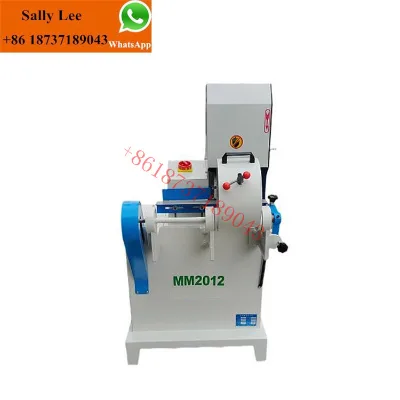
Source 30 high accuracy wood polishing machines with varying motor powers and capacities. Buyers can compare models like HT-PGJ01 and HT-MM2012A for wood bead polishing and drum sanding applications.
Key considerations
Products List


Factory Price Automatic Polisher Woodworking Machinery Wood Polishing Machine
$10500.00 - $10700.00
MOQ: 1 Pieces

Customized Disc Sander Polisher Wood Polishing Woodworking Machine with High Quality
$9700.00 - $9900.00
MOQ: 1 Pieces

High Quality Thick and Solid Automatic Polisher Wood Polishing Woodworking Machinery
$10500.00 - $10700.00
MOQ: 1 Pieces

Optional Upgrade Automatic Polishing Sanding Woodworking Machinery Wood Polisher
$9700.00 - $9900.00
MOQ: 1 Pieces

Thick and Solid Automatic Sanding Wood Polisher Polishing Machine Woodworking Machinery
$3500.00 - $3600.00
MOQ: 1 Pieces


High Quality Wood Polishing Brushing Sanding Machine for Woodworking Industry
$6800.00 - $8800.00
MOQ: 1 Pieces




Comprehensive Sourcing Guide
Strategic Sourcing Guide for High-Accuracy Wood Polishing Equipment
Understanding the Technical Landscape of Wood Bead and Surface Finishing
When sourcing a high-accuracy wood polishing machine, buyers must first distinguish between the specific mechanical architectures available in the current market. The term "high accuracy" in this context often refers to machines designed for precision shaping and surface uniformity, such as those categorized as "Drum Wood Sanders" or "Belt Wood Sanders." The observed product landscape reveals a diverse array of configurations, each optimized for different stages of the wood finishing process. For instance, specific models like the HT-PGJ01 are explicitly identified as "Wood Bead Making Machines," indicating a specialized function for creating uniform, rounded profiles rather than general surface planing. Conversely, other units in the same supply chain are designated as "Belt Wood Sanders," which utilize abrasive belts to achieve a consistent finish on larger surface areas.
The technical specifications provided by suppliers highlight significant variance in power and operational parameters, which directly impacts the achievable accuracy. Motor power ratings observed in the catalog range from 0.75kw to 9.94kw, with specific configurations such as a 1.1kw unit for bead making and a 3kw unit for broader sanding applications. High-accuracy operations often require variable speed capabilities to adapt to different wood densities and desired finish textures. The presence of "Variable Speed" attributes in the product data suggests that modern units allow operators to fine-tune the rotational velocity of the sanding drums or belts. Furthermore, the mechanical drive systems exhibit distinct velocity profiles; for example, driving-wheel velocities are recorded at 1420r/min, while feeding wheel velocities are set at 70r/min. These specific ratios are critical for maintaining a consistent feed rate, which is a primary determinant of surface smoothness and dimensional accuracy.
Buyers must also scrutinize the physical dimensions of the machinery, as these dictate the maximum workpiece size that can be processed with high precision. The standard dimensions for these units vary widely, ranging from compact 6006001150mm frames to substantial 310019001900mm industrial units. The processing capabilities are equally specific; some machines are designed for processing widths under 1000mm, while others accommodate widths up to 1300mm. Thickness constraints are equally important, with maximum processing thicknesses generally capped between 10mm and 100mm. For high-accuracy applications, the ability to handle specific thickness ranges, such as 2-200mm on certain sanding plates, ensures that the machine can accommodate a wide variety of product geometries without compromising the finish quality.
Compliance Verification and Certification Standards
In the global procurement of industrial machinery, verifying compliance with international safety and quality standards is a non-negotiable step. The supplied product data explicitly confirms that the equipment carries the CE certification, a mandatory marking for products sold within the European Economic Area. This certification indicates that the machinery meets the essential health, safety, and environmental protection requirements. However, buyers should treat this as a baseline observation rather than a guarantee of universal compliance. It is prudent to verify that the specific unit being purchased includes all necessary documentation to support the CE claim, including technical construction files and risk assessment reports.
Beyond the CE mark, the market often references ISO9001 as a standard for quality management systems. While this standard is frequently mentioned in the broader context of the industry, the specific product attributes provided do not explicitly confirm that every listed unit is manufactured under an ISO9001-certified facility. Therefore, procurement teams should not assume this status based solely on the product listing. Instead, buyers must request specific evidence of the manufacturer's quality management system certification. This verification process ensures that the production processes are consistent and that the high-accuracy tolerances advertised are maintained through rigorous internal controls.
The origin of the machinery is another critical factor in compliance. The observed data indicates that these units originate from Henan, China (Mainland). While this region is a major hub for woodworking machinery, it is essential for buyers to understand the local regulatory environment and how it aligns with their domestic import requirements. The "Fumigation-Free Wooden Box Packaging" noted in the product attributes is a specific compliance feature that addresses international phytosanitary regulations, facilitating smoother customs clearance. This packaging standard reduces the risk of pest introduction and aligns with international shipping protocols, a detail that should be verified during the logistics planning phase to avoid delays.
Cost Drivers and Pricing Dynamics in Wood Polishing Systems
The financial landscape of sourcing high-accuracy wood polishing machines is influenced by a complex interplay of technical specifications, material costs, and operational capabilities. The observed price range for these units spans from 505 USD to 23,200 USD, a variance that reflects the significant differences in machine complexity, power output, and processing capacity. The lower end of this spectrum likely corresponds to smaller, single-function units such as the 0.75kw models designed for specific tasks like sisal length processing or limited-width sanding. In contrast, the higher price points are associated with heavy-duty, multi-functional systems that feature higher motor powers, such as the 9.94kw total power configurations, and larger physical footprints capable of handling substantial workpieces.
Motor power is a primary cost driver in this category. Units with higher power ratings, such as the 8kw or 3kw models, require more robust electrical components, heavier castings, and more advanced control systems to manage the increased torque and heat generation. These factors directly contribute to the manufacturing cost and, subsequently, the final price. Additionally, the inclusion of variable speed drives and specialized feeding mechanisms, such as the driving and feeding wheels with specific velocity ratios, adds to the engineering complexity and cost. Buyers should analyze the total cost of ownership rather than just the initial purchase price. A machine with a higher upfront cost may offer superior energy efficiency, longer belt life, and reduced maintenance requirements, ultimately providing a better return on investment for high-volume production environments.
The Minimum Order Quantity (MOQ) observed in the market is consistently 1 unit, indicating a flexible purchasing environment that accommodates both small workshops and large industrial facilities. This low barrier to entry allows buyers to acquire a single unit for pilot testing or immediate deployment without the need for bulk inventory commitments. However, the absence of bulk pricing data in the provided facts suggests that buyers should negotiate based on volume when purchasing multiple units. The "Customization: Available" attribute further influences cost, as bespoke modifications to the machine's dimensions, power supply, or control interfaces will likely incur additional charges. Buyers must clearly define their customization needs early in the negotiation process to avoid unexpected cost escalations.
Typical Applications and Operational Use Cases
The versatility of high-accuracy wood polishing machines is evident in the diverse range of applications supported by the available models. The product data explicitly identifies "Wood bead polishing" as a primary use case, highlighting the machine's capability to produce uniform, rounded wooden components. This application is critical for industries such as furniture manufacturing, toy production, and decorative trim creation, where dimensional consistency and surface smoothness are paramount. The specific model HT-PGJ01, designed as a Wood Bead Making Machine, exemplifies this specialized application, utilizing a drum sanding mechanism to achieve the desired profile.
Beyond bead making, these machines are widely used for general surface finishing and planing. The "Belt Wood Sander" category supports applications requiring the smoothing of flat surfaces, such as tabletops, cabinet doors, and flooring panels. The sanding plate width of 630mm and the ability to process materials up to 200mm in thickness make these units suitable for a broad spectrum of woodworking tasks. The "High Efficiency" advantage noted in the product attributes suggests that these machines are designed to minimize processing time while maintaining high-quality finishes, making them ideal for high-volume production lines.
The operational parameters also dictate specific use cases. For instance, the feeding speed range of 5-25m/s allows for rapid processing of long workpieces, while the work pressure of 0.5Mpa indicates the use of pneumatic systems for clamping or feeding mechanisms. This combination of speed and pressure control enables the machine to handle both delicate and robust materials with precision. The processing width limits, such as the <1000mm and <1300mm specifications, define the maximum size of the workpiece that can be effectively polished in a single pass. Buyers should match these specifications to their typical product dimensions to ensure optimal performance and avoid the need for multiple passes or secondary operations.
Supplier Evaluation and Quality Assurance Protocols
Evaluating a supplier for high-accuracy wood polishing equipment requires a rigorous assessment of their technical capabilities, production standards, and after-sales support. While the product data confirms the origin as Henan, China, buyers should not rely solely on location as a proxy for quality. Instead, they must verify the supplier's track record in manufacturing precision machinery. The availability of customization options is a positive indicator of a supplier's flexibility and technical depth, suggesting that they can adapt machines to meet specific client requirements. However, buyers should request detailed case studies or references from previous clients who have utilized these customization services to validate the supplier's claims.
Quality control is a critical component of the supplier evaluation process. Buyers should inquire about the testing procedures employed before shipment, including checks for motor performance, belt alignment, and dimensional accuracy. The specific technical parameters provided, such as the sanding plate thickness range of 2-200mm and the abrasive belt speed of 18m/min, serve as benchmarks against which the final product should be tested. It is advisable to request a pre-shipment inspection report that documents these parameters to ensure the machine meets the advertised specifications. Additionally, the "New" condition of the products confirms that the units are not refurbished, but buyers should still verify the warranty terms and the availability of spare parts to ensure long-term operational reliability.
The packaging standard of "Fumigation-Free Wooden Box Packaging" is another factor to consider during supplier evaluation. This indicates a commitment to international shipping standards and suggests that the supplier is experienced in handling export logistics. Buyers should confirm that the packaging is robust enough to protect the machine during transit, especially given the heavy weights observed, such as the 1900kg unit. A supplier that invests in high-quality packaging is more likely to maintain the precision of the machine's internal components, which are sensitive to vibration and impact.
Long-Term Procurement and Maintenance Considerations
Sourcing a high-accuracy wood polishing machine is a long-term investment that requires careful consideration of maintenance, energy consumption, and operational longevity. The total power consumption of the machinery, which can reach up to 9.94kw for larger units, is a significant factor in the operational cost. Buyers should calculate the energy efficiency of the machine relative to its output capacity to ensure it aligns with their budget and sustainability goals. The presence of variable speed drives can help optimize energy usage by allowing the machine to operate at lower speeds when full power is not required, thereby reducing electricity costs.
Maintenance requirements are another critical aspect of long-term procurement. The abrasive belts and sanding plates are consumable items that will require regular replacement. The specific dimensions of the sanding plates, such as the 630mm width, and the length of the sisal or sandpaper, such as 50mm or 30mm/60mm, determine the frequency and cost of consumable replacements. Buyers should verify the availability of these consumables from the supplier or authorized distributors to minimize downtime. The "High Efficiency" advantage of the machines suggests that they are designed to minimize wear and tear, but regular maintenance schedules are still essential to maintain high accuracy over time.
The weight of the machines, ranging from 100kg to 1900kg, also impacts installation and long-term stability. Heavier units are generally more stable during operation, reducing vibration and improving the accuracy of the finish. However, they require a more robust foundation and potentially specialized lifting equipment for installation. Buyers should ensure that their facility is equipped to handle the weight and dimensions of the selected machine. Finally, the customization options available allow buyers to tailor the machine to their specific production needs, potentially extending its useful life and adaptability to future product changes. By carefully evaluating these long-term factors, buyers can make informed decisions that maximize the value and performance of their wood polishing equipment.
FAQs
What certifications do these wood polishing machines have?
The equipment carries CE certification, indicating compliance with European safety standards. Buyers should verify specific documentation for each unit to ensure full compliance with local import regulations before purchase.
Can I customize the machine specifications for my needs?
Customization is available for these high accuracy wood polishing machines. Buyers can request modifications to dimensions or power settings, but should confirm specific requirements and potential cost impacts with the supplier.
What is the minimum order quantity for these units?
The minimum order quantity is one unit for all listed models. This allows buyers to purchase single machines for pilot testing or immediate deployment without needing to commit to bulk inventory.
How much does a High Accuracy Wood Polishing Machine cost?
Prices range from 505 USD to 23,200 USD depending on the model and specifications. Higher costs typically correspond to increased motor power, larger processing widths, and more complex mechanical configurations.
Where are these wood polishing machines manufactured?
The machines originate from Henan, China, which is a major hub for woodworking equipment. Buyers should account for shipping logistics and verify that the fumigation-free wooden box packaging meets international phytosanitary standards.
What are the maximum processing dimensions for these sanders?
Processing widths vary by model, with some handling up to 1300mm and others under 1000mm. Maximum thickness capabilities generally range from 2mm to 200mm, allowing for diverse wood finishing applications.